

AI Overview Fraud: How Fake Customer Service Numbers Are Appearing in Search Results

A traveler searches for “Emirates customer service number.” An answer appears instantly. It sits at the top of the page, no ads to click and no scrolling required, and it looks complete. They dialed the number, thinking it was legitimate. It isn’t: this is AI Overview fraud.
This isn’t a paid search problem. It’s happening inside AI-generated results, the layer people are starting to trust more and more. ImpersonAlly research detected these examples, based on real cases of brands being impersonated inside AI-generated results.
The pattern becomes clear once you see it: fake content is seeded across the web, real brand names appear next to fraudulent content, and AI systems stitch those signals together into something that looks like a verified answer.
This is what LLM manipulation looks like in 2026. Fake content is spread across the web, absorbed into AI-generated search systems, and returned to users as trusted answers. The scam starts with what the model has already been fed, and long before the user makes the call.
For brands, fraudsters are actively defrauding customers using their name. For marketing teams, this sits outside what you typically monitor. For customer support teams, it shows up as complaints that don’t make sense.
This type of manipulation is becoming a larger problem across AI-generated systems. A Washington Post report on LLM grooming and manipulated AI-generated answers noted that many AI systems still struggle to reliably detect sophisticated disinformation, especially when newer web content is prioritized. In these cases, fraudsters are using similar tactics to push fake support information into AI-generated results.
How AI Overview fraud works

The issue is that there’s nothing obvious to take down. In older impersonation scams, fraud often came through fake ads, spoofed domains, or redirect chains. ImpersonAlly previously researched cases involving Unicode Google Ads impersonation fraud and a Shopify support scam running through Google Ads.
This works differently. You’re not tackling fake domains or redirect chains. There’s no ad account either. The manipulation is spread out across forums, translated pages, copied content, and support-style posts seeded around the web.
Analyzing the suspicious sources shows that the contact details appeared across pages that looked harmless on their own. These include travel diaries, Reddit threads, YouTube pages and translated blog posts. The content varies, but it follows a few recognizable patterns:
- Fake customer service numbers placed next to real brand names.
- Reposted support content, where incorrect phone numbers are repeated across multiple pages without verification.
- Old support listings that still appear legitimate and continue circulating online.
- Deliberately planted entries, designed to influence what AI systems ingest.
Large language models train on and learn from all of this content and they don’t verify. When someone searches for help, AI-generated results pull from what appears most consistent across sources.
This is what AI Overview fraud, often called AI Overview poisoning or LLM poisoning, looks like in practice. No one’s breaking the system; they’re maliciously feeding it. At scale, this becomes AI search manipulation, where the output reflects what’s been seeded rather than what’s accurate.
In one case, searches related to Emirates booking support surfaced AI-generated responses containing multiple booking and customer service phone numbers.

When ImpersonAlly reviewed the sources of the replies, multiple planted content sources where found. Similar Emirates-related contact information was also appearing across other web sources, including forum discussions, travel pages, and support-style content cited in sources.

On their own, many of these pages looked routine or harmless. Together, they reinforced the same booking and customer support pathways across search results and AI-generated answers.
When compared against Emirates’ official support channels, the differences became clearer:
Emirates was not the only pattern we observed. Similar behavior also appeared around Expedia support searches. In one Reddit thread, a Redditor asked how to contact customer service, and users began sharing support phone numbers.
The replies that followed are what make this example important. Others said the numbers worked, while some responses also received upvotes. This makes the information appear more credible through repeated validation.


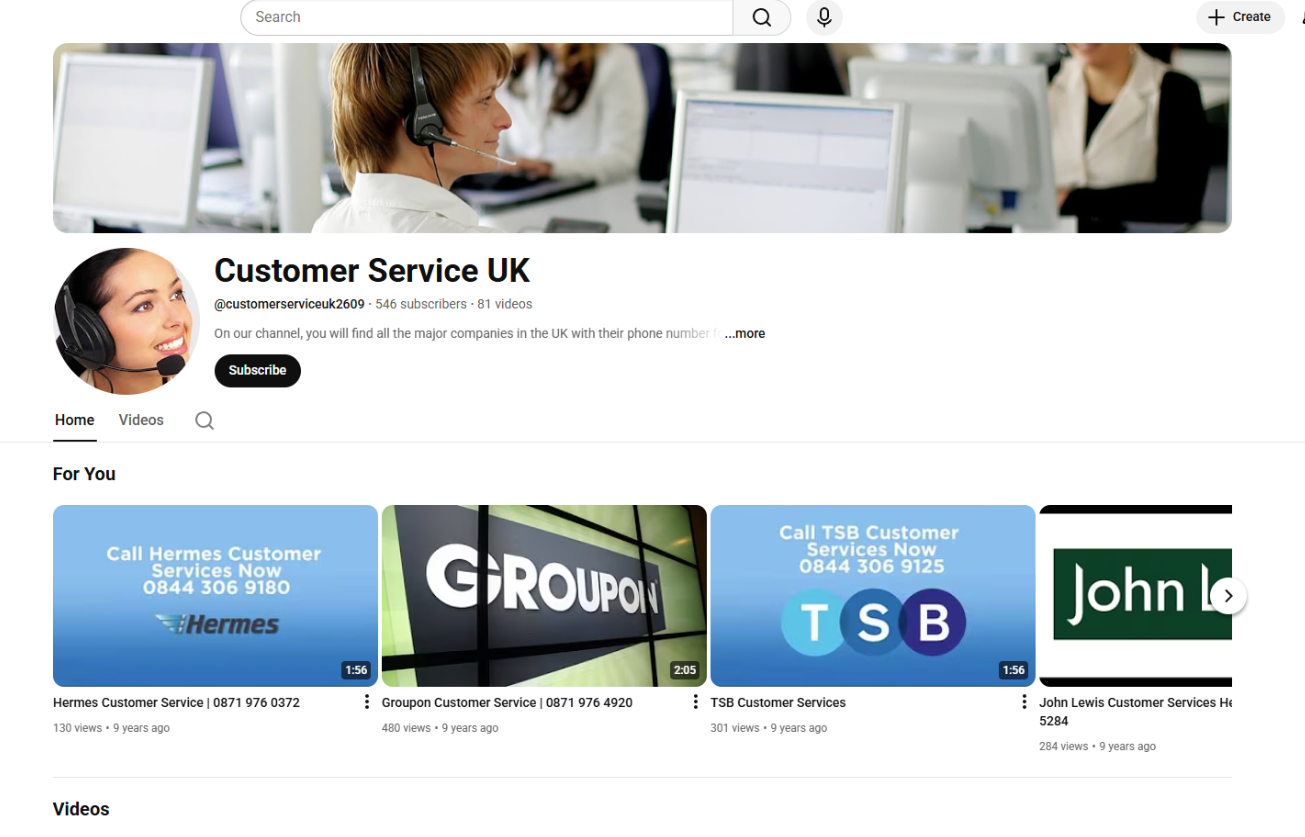
The research also identified YouTube channels posting customer service and booking numbers across multiple airlines at the same time. Different carriers appeared in the videos, but the format stayed nearly identical: airline name, phone number, and booking or support messaging repeated across channels.

After a while, it stops looking like a single random page or isolated result. Similar contact information starts repeatedly showing up across different brands and platforms. Once similar information starts appearing often enough, it becomes less questionable. That also gives AI systems more material to absorb and repeat.
ImpersonAlly had previously documented customer service scams running through paid search ads. A report from the Washington Post suggests similar issues are now appearing in AI-generated results.
To most users, it just looks like another support result. The problem starts after the call. People are often pushed into sharing personal or financial information, and in some cases, even granting remote access to their devices.
Why did this slip past detection?
This isn’t a traditional Google Ads impersonation. There are no triggered keywords, no visible campaign, and no obvious signal for monitoring tools. In the cases observed, the manipulation sits in the content layer and only becomes visible when the AI-generated answer is shown to the user.
Most risk teams are still focused on traditional sources where impersonation previously occurred. This sits outside that layer. Some of these cases also overlap with what the industry now calls generative engine optimization (GEO), where online content is shaped to influence how information appears in AI search results. Reports covering AI search scams and manipulation tactics suggest those same visibility techniques can also be abused.
What these point to
Fake content can be published fast, across enough sources to look consistent, and pulled into AI-generated answers just as quickly. Once it’s there, it doesn’t stay contained. It gets repeated, summarized, and reinforced.
Most brands don’t see this layer at all. There’s no dashboard for it, and the tools in place were built for ads and traffic, not for what the AI actually says. That’s where the gap lives. This introduces a new challenge for brands: another layer of visibility where your brand is being interpreted by systems you don’t control.
With AI-generated answers becoming the default way people get information, that also makes them the new target. If you want to understand how your brand is showing up, you have to look at the answer itself.
If you’re not monitoring what AI-generated results say about your brand, you may be missing a layer that scammers are already exploiting. Book a demo


Subscribe to the newsletter
Your Brand Protection Ally
Are your Ads being Impersonated by others?
Author
