

How AI Impersonators Are Breaking Social Media Trust

With already half of 2025 gone, the social media landscape is facing an unprecedented threat: AI-generated impersonation. This concept refers to the making of fake profiles, posts, and interactions on social platforms using advanced artificial intelligence algorithms. These AI systems can copy human behavior, communicational patterns, and even visual images and videos with alarming similarity to the original faces and voices.
AI-generated impersonation goes further than simple bots or fake accounts like in the past. These sophisticated impersonators can engage in complex conversations, share good looking original content, and build networks that appear genuine at first glance. They leverage deep learning models trained on vast datasets of human interactions, allowing them to adapt their behavior based on the platform and target audience.
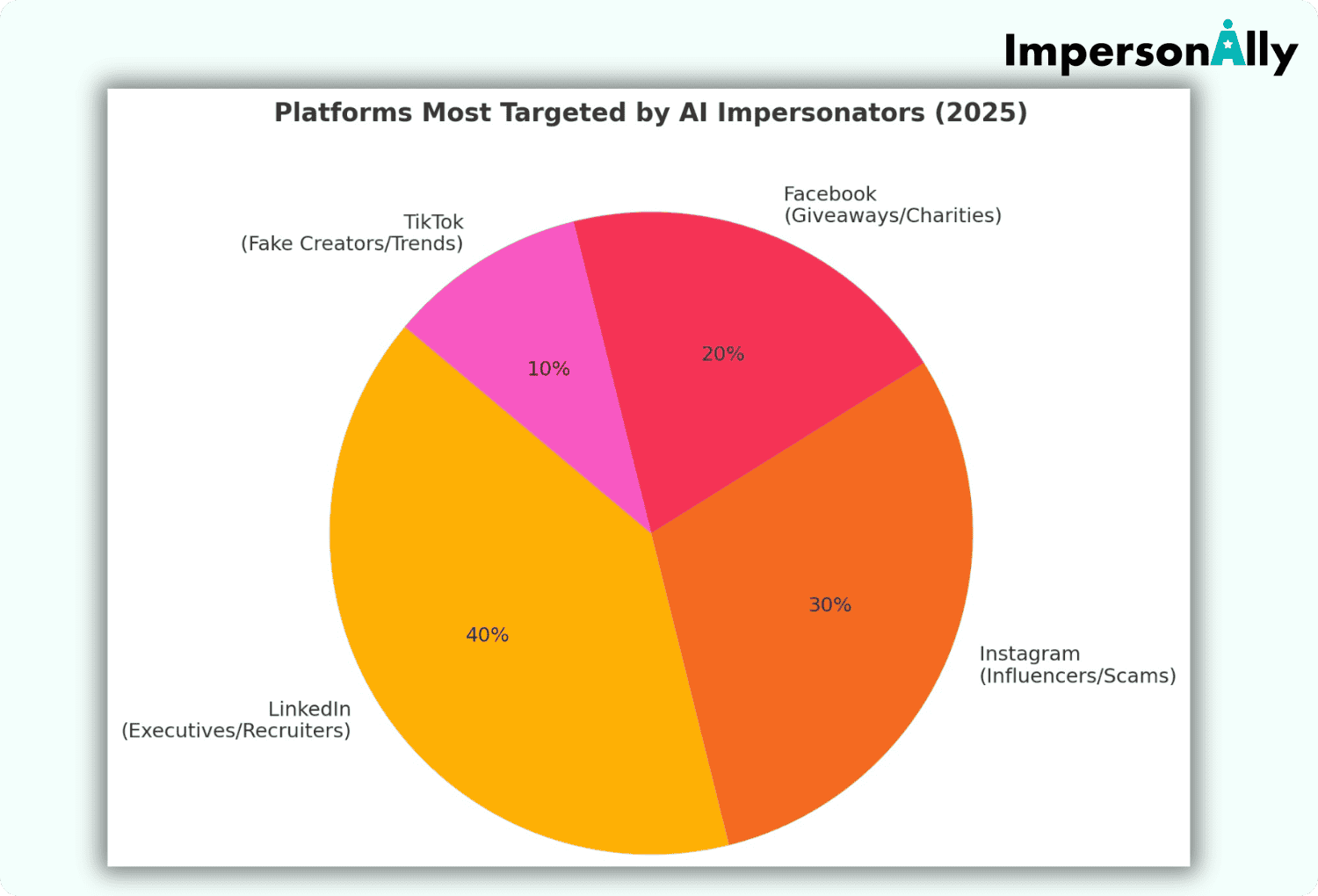
The growth of this trend is alarming. Recent estimates suggest that 15–20% of LinkedIn profiles appear suspicious or bot-like, and many fake accounts impersonate executives or recruiters to gain credibility and launch social engineering attacks, making LinkedIn one of the most targeted platforms for impersonation fraud.
The rise of these illicit actions on social media has eroded public trust, turning what was once the cornerstone of online interaction into a thing of the past. Users are becoming skeptical of new connections and viral content. It’s getting harder to distinguish genuine personalities from AI-powered fakes, leading to potential PR disasters.
For individual users, the rise of AI impersonation presents a personal security risk. Identity theft has evolved from simple data breaches to the creation of digital doppelgangers, capable of damaging reputations and relationships in ways previously unimaginable.
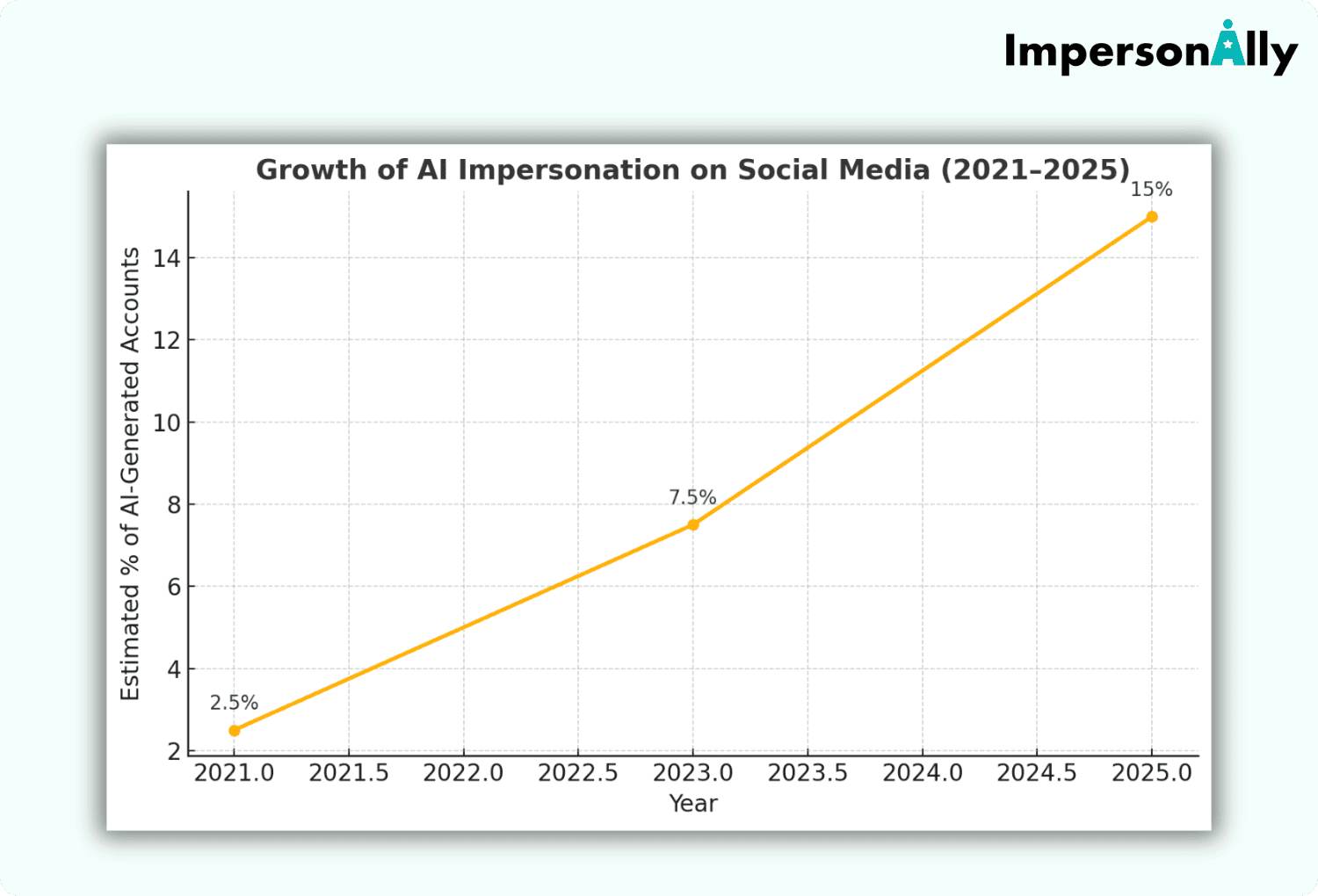
AI-generated impersonators on social media platforms are not merely a technological curiosity; they represent a significant threat with far-reaching consequences. These digital doppelgangers are created and deployed with specific goals in mind, each potentially devastating for individuals and businesses alike.
-Phishing
One of the primary motivations behind AI impersonation is phishing. By creating convincing fake profiles that mimic trusted individuals or organizations, cybercriminals can lure unsuspecting users into divulging sensitive information. These attacks often involve sending seemingly legitimate messages or links that, when clicked, lead to fake login pages designed to capture usernames and passwords.
In early 2025, multiple X users reported phishing DMs from fake “X Support” profiles asking them to verify their identity or risk account suspension. The links led to a near-identical login page that harvested email/password combos.
-Scams
Another big aim of AI impersonators is to run scams. They exploit the trust people already have in famous brands or well-known individuals to trick victims. Using this borrowed credibility, fraudsters can set up schemes like fake investment offers or selling counterfeit products, making the fraud look far more believable and convincing.
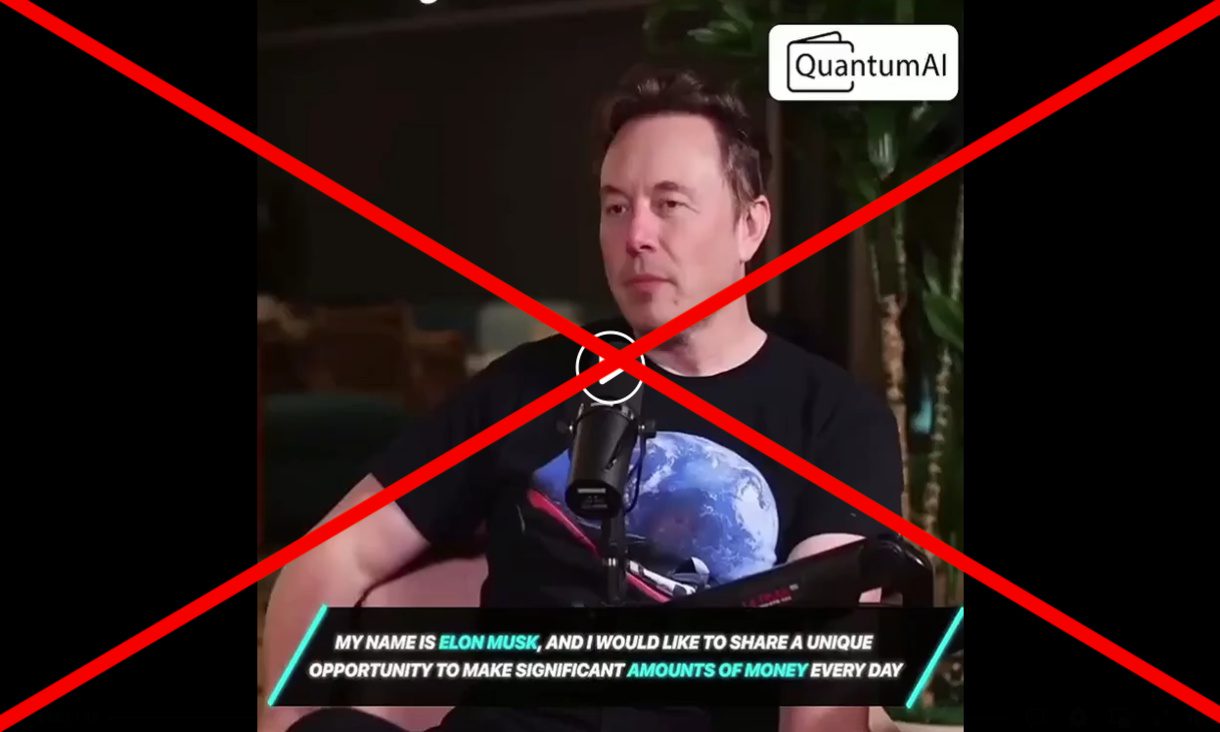
One of the most high-profile examples was a fake AI-generated interview with Elon Musk, which circulated on YouTube in 2023. The deepfake video appeared to show Musk promoting a crypto investment opportunity on CNBC, encouraging viewers to send Bitcoin or Ethereum to a wallet address with the promise of doubling their money through “Quantum AI.” Neither the interview nor the opportunity was real, it was all an AI-powered scam exploiting Musk’s public persona and the trust associated with major news outlets.
A June 2025 investigation by The Guardian exposed a widespread scam targeting elderly TikTok personalities. Scammers duplicated content from creators, such as 84‑year‑old tailor George Tsaftarides and 85‑year‑old jokester Charles Ray, and repackaged their videos with emotional narratives (“Save my cat sanctuary”) to push mass‑produced products like slippers and blankets. One duped victim commented, “Just ordered two! Sending love to these kittens,” not realizing the goods were cheap knock‑offs sold by impersonators. Over 100 fake profiles were discovered misusing their images and captions to drive sales
-Reconnaissance for Bigger Attacks
In some cases, social impersonation is just the first move. A fake LinkedIn profile may be used to connect with mid-level employees and gather intel for a larger social engineering attack, like a business email compromise or CEO fraud scheme. These impersonators collect information on org structure, email formats, and internal tools, then use it to launch highly targeted cyberattacks.
A 2024 breach at a European fintech startup began with a fake LinkedIn profile claiming to be their new CMO. The impersonator connected with over 40 employees, gathering enough context to spoof internal emails that eventually led to a $300K BEC fraud.
– Brand Damage or Reputation Manipulation
The potential financial and reputational damages resulting from these activities are substantial. For individuals, falling victim to a phishing attack or scam can lead to immediate financial losses, identity theft, and long-term credit issues. For businesses, the stakes are even higher. A successful impersonation attack can result in:
- Direct financial losses through fraudulent transactions or misdirected payments
- Reputational damage that erodes customer trust and brand value
- Legal liabilities if sensitive customer data is compromised
- Loss of competitive advantage if proprietary information is leaked
- Decreased stock value for publicly traded companies
Moreover, the ripple effects of a high-profile impersonation incident can extend far beyond the immediate target. Partners, suppliers, and customers may all face secondary impacts, creating a domino effect of financial and reputational harm throughout an entire business ecosystem.
Not all AI impersonation is driven by money. In some cases, it’s used to manipulate public opinion and destabilize trust at a national scale.
In March 2022, during the early stages of Russia’s invasion of Ukraine, a deepfake video of President Volodymyr Zelenskyy surfaced on social media. In the video, Zelenskyy appeared to instruct Ukrainian troops to lay down their arms and surrender to Russian forces.
The video was fake. It was an AI-generated impersonation of Ukraine’s president, inserted into the information ecosystem via a hacked Ukrainian news site and then widely spread through social media. While quickly debunked, the incident served as a wake-up call about how AI-generated deception can weaponize trusted figures to sow confusion, manipulate populations, and erode public trust.
In early 2024, another example struck closer to home for U.S. voters. Just before the New Hampshire presidential primary, thousands of voters received robocalls impersonating President Joe Biden. The message, spoken in Biden’s exact voice and tone, urged them to “stay home and save your vote for November.”
It wasn’t real. The voice was an AI-generated deepfake, designed to suppress voter turnout by mimicking the president. The incident drew national attention and sparked urgent discussions about the need for legislation and safeguards against AI-generated election interference.
In today’s digital world, AI-powered impersonation is more advanced and more convincing than ever. Today’s fake profile impersonations are no longer just stolen photos and basic bios. They’re algorithmically generated personas backed by realistic AI-generated images, human-like language, and automated behavior designed to act and pass as real people across platforms like LinkedIn, Instagram, Facebook, and TikTok.
Thanks to AI, impersonators can now:
- Use huge language models to write content that is emotionally rich and fluid.
- Use tools to create image galleries and profile pictures.
- Simulate actual users by automating posting schedules, engagement, and responses.
- Build whole identity ecosystems that validate and support each other.
These impersonators vary depending on the platform:
- Fake executives, recruiters, and corporate profiles are exploited on LinkedIn to target professionals with data harvesting schemes or employment frauds.
- Facebook and Instagram are employed for visual deception. False freebies, lifestyle profiles, and influencers that appear authentic but are actually used for phishing or scams.
- TikTok observes that AI-generated voices, faces, and trends spread quickly, making it more difficult to identify them before harm is done.
AI tools also tap into platform APIs, scale impersonation across networks, and react in real-time to trends or events. This makes impersonators feel timely, trustworthy, and increasingly hard to detect from real users, especially for those not trained to spot subtle red flags.
Even though AI-generated profiles have become so sophisticated, there are still some signs that can help you identify these artificial creations. By paying close attention to certain red flags, you can protect yourself and your brand from potential AI impersonators.
Inconsistencies in Posting Patterns
- Unusually consistent posting intervals (exactly every x amount of hours)
- Sudden bursts of activity followed by long periods of silence
- Posts that seem out of character or misaligned with the profile’s supposed interests
- Lack of engagement with comments or replies, especially to direct questions
Unnatural Language Use
- Overly formal or stilted language that doesn’t match the context
- Repetitive use of certain phrases or sentence structures
Suspicious Network Connections
AI-generated profiles often have abnormal social networks:
- A large number of connections made in a very short time
- Connections that don’t make geographical or professional sense
- Lack of mutual connections with other profiles in their supposed industry or location
- Endorsements or recommendations from profiles that also show signs of being AI-generated
By keeping an eye out for these red flags, you can better protect yourself and your organization from the risks posed by AI-generated impersonators on social media platforms.



Subscribe to the newsletter
Your Brand Protection Ally
Are your Ads being Impersonated by others?
Author
